服務內容
Blind Parts
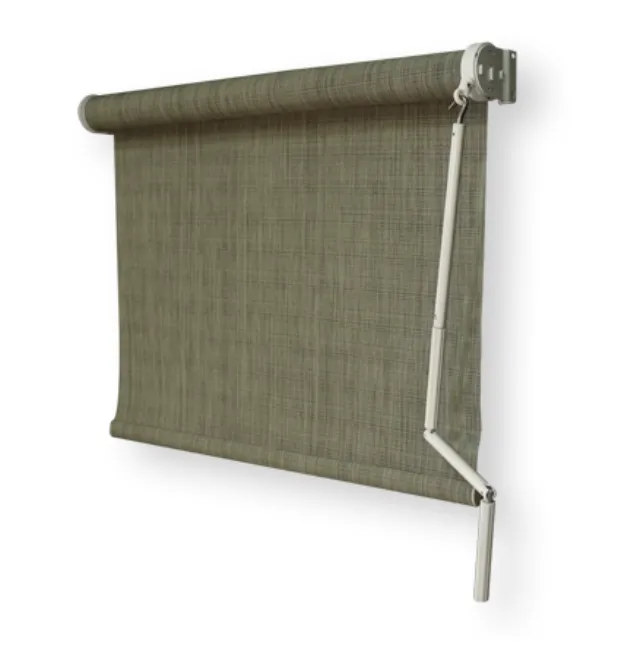
This article breaks down the key components of a roller blind system, explains how
each part functions, and helps you identify what to look for when buying roller
blind spares from a supplier.
Why It Matters
For distributors and manufacturers, knowing how a roller blind system works is
not just a technical detail — it is a business advantage.
When you understand what each component does and how the parts interact, you are
in a much stronger position to evaluate supplier quality, identify the root
cause of product failures, and have informed conversations with manufacturing
partners.
Roller blind components vary significantly in design and quality across
different suppliers, and the differences are not always visible from the
outside.
A buyer who understands the mechanics will ask the right questions, catch
potential issues earlier, and build a more reliable product line.
This knowledge also makes it easier to manage after-sales situations when end
customers report problems in the field.
Core Parts
A roller blind system consists of several interconnected parts that must work
together reliably.
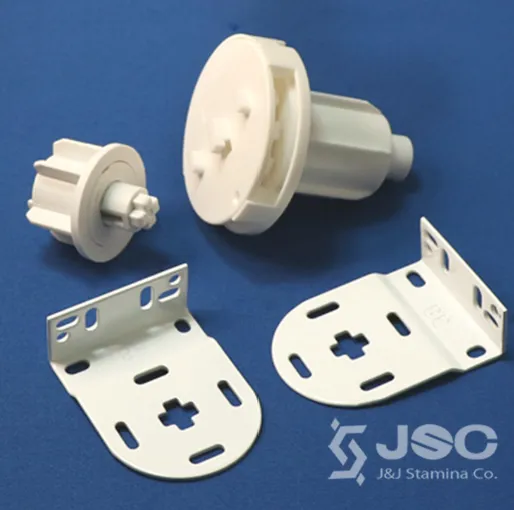
The main components are the tube, the control mechanism, the brackets, the end
plugs, the fabric, and the bottom rail.
The tube is the central barrel around which the fabric is wound, and its
diameter determines which control mechanisms and brackets are compatible.
The brackets hold the entire assembly in place against the wall or ceiling and
must be strong enough to support the weight of the fabric, particularly in
wider or heavier blind applications.
The end plugs sit inside each end of the tube and serve as the connection point
between the tube and the brackets.
Each of these roller blind components plays a defined role, and a failure in
any one of them will affect the performance of the entire system.
Component List
Tube / Barrel
Supports and winds the fabric
Control Mechanism
Operates raising and lowering
Brackets
Mounts the blind to wall or ceiling
End Plugs
Connects tube to bracket
Bottom Rail
Keeps fabric flat and weighted
Fabric
The visible window covering element
Clutch System
The roller blind clutch mechanism is the heart of any chain-operated roller
blind.
It is a small but precisely engineered unit that sits at one end of the tube
and translates the pulling motion of the chain into rotational movement that
winds or unwinds the fabric.
Inside the clutch, a set of gears and a locking mechanism work together to
allow controlled movement in both directions while preventing the blind from
free-falling when the chain is released.
The quality of the roller blind clutch mechanism has a direct impact on how
smooth and reliable the blind feels during everyday use.
A poorly made clutch may feel stiff, skip during operation, or fail prematurely
under regular use.
When evaluating suppliers, always ask about cycle testing results for their
clutch units.
A quality clutch should be rated for at least 10,000 operating cycles under
standard testing conditions.
Spring Blinds
A spring roller blind operates on a fundamentally different principle from a
chain-controlled blind.
Instead of a chain and clutch, it uses an internal coil spring housed inside
the tube.
When the user pulls the blind down and releases it at the desired position,
the spring engages a locking mechanism that holds the blind in place.
A second short pull releases the lock and allows the spring to retract the
blind upward.
This pull-and-release action makes spring roller blinds intuitive to operate
and eliminates the need for a visible chain.
This is particularly useful for child safety applications and settings where a
cleaner aesthetic is preferred.
However, spring mechanisms require careful calibration to match the weight and
width of the fabric.
An underpowered spring may cause the blind to sag or fail to retract fully.
Buyers sourcing spring roller blind systems should always confirm the weight
range each spring mechanism is rated for before specification.
System Comparison
Operation
Chain Control: Pull chain up or down
Spring Control: Pull down and release
Visible Chain
Chain Control: Yes
Spring Control: No
Child Safety
Chain Control: Requires tensioner
Spring Control: Inherently safer
Best For
Chain Control: Commercial and wide blinds
Spring Control: Residential and lighter blinds
Adjustability
Chain Control: Easy position control
Spring Control: Fixed stop points
Spare Parts
Sourcing roller blind spares is a common requirement for distributors who supply
both new products and replacement parts.
The most frequently requested spares include clutch mechanisms, chain loops,
brackets, end plugs, and bottom rails.
When evaluating a supplier for spares, the most important factor is consistency.
The parts must be dimensionally identical to the originals so that they fit
without modification.
This is why it is often beneficial to establish a relationship with a single
supplier for both original equipment and spare parts rather than mixing parts
from multiple sources.
Reliable suppliers maintain stock of their most common components and can
provide technical drawings or specification sheets for each item.
Always confirm lead times for spare parts separately from full system orders,
as availability can differ significantly.
Hardware
The term blind hardware covers all the physical components that make up a roller
blind system, from the clutch and brackets through to the chain and connectors.
The quality of blind hardware is determined by material selection,
manufacturing precision, and surface treatment.
High-quality hardware uses materials suited to the demands of regular use.
For example, nylon gears in a clutch mechanism provide a strong balance of
durability and smooth operation.
Lower-grade plastic alternatives often wear quickly and generate more noise
over time.
Surface treatments such as plating or anodising protect metal components from
corrosion.
This is particularly important for products intended for humid environments
such as bathrooms or coastal regions.
When assessing blind hardware from a new supplier, request samples and conduct
a basic durability assessment before committing to a production order.
Taiwan Supply
Taiwan has a long-established reputation as a reliable source of window blind
hardware, with manufacturers that combine engineering expertise with flexible
production models.
Many Taiwan-based suppliers maintain extensive libraries of existing component
designs.
This allows buyers to source proven and tested parts without the cost and time
associated with custom tooling.
Factories in Taiwan also tend to offer made-to-measure services for buyers who
require specific configurations.
They are experienced in meeting export requirements across Europe, Australia,
and the Americas.
For distributors building or expanding roller blind product lines, working with
a Taiwan-based manufacturer provides access to a broad range of roller blind
components and spares under one roof.
This is further supported by suppliers who understand international quality
expectations and compliance requirements.
FAQ
Sidewinder
What is the difference between a clutch mechanism and a sidewinder in a roller
blind?
These two terms refer to the same component.
The clutch mechanism is the technical name for the unit that controls the
chain-operated movement of a roller blind.
Sidewinder is the common trade term used throughout the industry.
Both describe the device that sits at one end of the tube and translates chain
movement into rotational motion.
Spring Size
How do I know if a spring roller blind mechanism is strong enough for my
fabric?
Each spring mechanism is rated for a maximum fabric weight and width.
To select the correct spring, you need to know the total weight of your fabric
roll at the intended drop length plus the weight of the bottom rail.
Your supplier should be able to provide a selection guide based on these
figures.
Compatibility
Can roller blind spares from different manufacturers be used interchangeably?
In some cases, yes, but compatibility depends on the tube diameter and bracket
design.
Components that share the same tube diameter standard, such as 38mm, are often
interchangeable across brands.
However, this should always be verified with a physical test before committing
to a supply arrangement.
Failure Cause
What is the most common cause of roller blind clutch failure?
The most common causes include dust and debris entering the clutch housing,
overloading the mechanism with fabric that exceeds its rated weight, and poor
quality gear materials that wear prematurely.
Regular maintenance and correct product specification at the point of sale can
significantly reduce failure rates.
EU Standards
What blind hardware certifications should I look for when sourcing for the
European market?
For the European market, child safety compliance is the most important
regulatory consideration and is governed by EN 13120.
This standard covers requirements for both corded and chain-operated blinds.
Suppliers exporting to Europe should be able to provide documentation
confirming compliance with this standard.
一直掉頭髮怎麼辦



J&J Stamina Co.
- 統一編號16800491
- 更多資訊J&J Stamina Co.
相關服務
-
室內裝修與公共藝術裝置:提升空間美學,創造生活藝術
從室內裝修到大型公共藝術裝置,昇泰企業社以創意和專業,為您打造美觀且實用的生活空間!為客戶提供最優質的室內裝修和公共藝術裝置服務 -
可分解產品開發製造與銷售.可接受小量訂單
環保可分解產品趨勢已來臨.本公司研發生物可分解產品.已開發出可取代美耐皿重複使用之耐熱餐具 -
傢俱代工噴漆、木作裝潢代工噴漆
歡迎光臨宇恩木藝企業社,我們是以各式木作代工噴漆為主要服務的公司,在技術與服務上宇恩木藝始終保持穩定成長的品質。 -
NEWMAT 新星 系列 造型雕刻矽酸鈣 天花板
新星系列造型雕刻矽酸鈣天花板(#1、#2)產品尺寸規格:產品型號:#1、#2標準規格:6m -
室內裝修與公共藝術裝置:提升空間美學,創造生活藝術
從室內裝修到大型公共藝術裝置,昇泰企業社以創意和專業,為您打造美觀且實用的生活空間!為客戶提供最優質的室內裝修和公共藝術裝置服務